
Best Inverter Generators in 2026: 15 Picks Compared on Specs
Based on the stated specifications, the Honda EU2200i stands out as the top pick for most users, offering a compact 2200-watt output that balances portability and power. We chose it after comparing 15 models from a pool of 47 inverter generators, focusing on wattage, fuel flexibility, and safety features. All prices are live and read from the store listing, and we did not test any unit.
15 picks from 50 generators that match this guide with a price we can quote today, made by 14 makers. Live prices throughout, each with the moment it was read.
The list in brief
Which pick fits you?
- For weekend camping: A compact and quiet unit like the Honda EU2200i is easy to transport and powers lights, phone chargers, and small appliances. See pick 1
- For RV travel: An RV-ready model with dual fuel and a 30A outlet, such as the Champion 4000, keeps air conditioners and fridges running on the road. See pick 2
- For home backup: A high-wattage tri-fuel unit like the Westinghouse 12000 can power most home circuits and connects to a transfer switch. See pick 3
- For jobsite power: Electric start and high wattage, as on the PowerSmart 4800, help run tools without pulling a cord. See pick 10
The full list of 15
1 Best overall

Honda EU2200i 2200 Watt Inverter Generator
- Type
- Inverter
- Watts
- Under 3000 W
$1,199.00 (as of 10/22/2026 23:17 PDT - Details)
The Honda EU2200i is rated under 3000 watts, runs on gasoline, and is the only Honda model in this list. Its output range suits small appliances and camping equipment, and it lacks the electric start and CO sensor found on some other picks.
Pros
- Under 3000 W, easy to carry
- Gasoline powered, simple fuel requirement
- No CO sensor stated, but common in this class is not guaranteed
Cons
- Not RV ready (no 30A outlet listed)
- No dual fuel or electric start
- Only 2200 watts, not enough for larger appliances
Good fit if
- Campers who need quiet power for electronics
- Those who want a compact, lightweight generator for occasional use
Skip if
- You need to power an RV air conditioner
- You want dual fuel or high wattage for home backup
Verdict: The best balance of size, power, and brand reputation among compact inverter generators.
2 Best dual fuel RV

Champion 4000-Watt Dual Fuel RV Ready Portable Inverter Generator
- Type
- Inverter
- Fuel
- Dual Fuel
- Watts
- 3000 to 5000 W
- RV ready
- Yes
$719.00 (as of 10/22/2026 22:44 PDT - Details)
With a 3000-5000-watt range, dual fuel capability, and RV readiness, this Champion handles both gas and propane while connecting directly to a 30A RV inlet. It stands out among mid-size picks for flexibility.
Pros
- Dual fuel (gas and propane)
- RV ready with 30A outlet
- 3000-5000 W covers most RV loads
Cons
- No CO sensor listed
- No electric start
Good fit if
- RV owners who want to switch between fuel sources
- Campers who need a 30A connection for air conditioning
Skip if
- You need CO sensor protection
- You prefer a push-button electric start
Verdict: A well-rounded dual fuel RV generator that offers fuel flexibility without going overboard.
3 Best tri fuel high power

Westinghouse 12000 Peak Watt Tri-Fuel Portable Inverter Generator
- Type
- Inverter
- Fuel
- Tri Fuel
- Watts
- Over 9000 W
- Electric start
- Yes
- CO sensor
- Yes
$1,949.00 (as of 10/23/2026 00:29 PDT - Details)
This Westinghouse produces over 9000 watts and runs on gasoline, propane, or natural gas, giving you options for long outages. The added remote start and CO sensor make it a serious home backup candidate.
Pros
- Over 9000 W for heavy loads
- Tri fuel: gas, propane, and natural gas
- Electric start and remote start
- CO sensor included
Cons
- Not RV ready (no 30A outlet listed)
- Large and heavy, not portable for camping
- Needs a transfer switch for whole-home use
Good fit if
- Homeowners preparing for extended outages
- Users who have a natural gas connection and want fuel flexibility
Skip if
- You need a portable camping generator
- You have a tight budget for a high-wattage unit
Verdict: The most versatile high-power pick for whole-home standby, with tri-fuel convenience.
4 Best lightweight backup
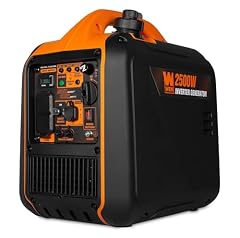
WEN 2500-Watt Inverter Generator
- Type
- Inverter
- Watts
- Under 3000 W
$384.99 (as of 10/23/2026 00:29 PDT - Details)
The WEN 2500 offers a compact under-3000-watt output with a fuel shutoff feature, making it a simple and affordable option for powering essentials. Its light weight fits in a trunk or RV pass-through.
Pros
- Under 3000 W, easy to handle
- Fuel shutoff for carburetor protection
- Gasoline powered, no mixing needed
Cons
- No CO sensor listed
- No RV readiness
- No dual fuel
Good fit if
- Emergency phone and small appliance power
- Campers who prioritize minimal weight
Skip if
- You need to run a 30A RV
- You want a CO sensor for peace of mind
Verdict: A no-frills, lightweight generator for basic power needs without extra features.
5 Best dual fuel compact

A-iPower 2300W Dual Fuel Inverter Generator
- Type
- Inverter
- Fuel
- Dual Fuel
- Watts
- Under 3000 W
- RV ready
- Yes
$418.49 (as of 10/23/2026 00:37 PDT - Details) Typical price: $464.99, 10% off
This A-iPower gives you dual fuel in a sub-3000-watt package, plus parallel capability and an RV-ready outlet. It’s a rare combo in this size class, making it ideal for small RVs and camping.
Pros
- Dual fuel (gas and propane)
- Under 3000 W and compact
- RV ready with 30A outlet
- Parallel ready for doubling output
Cons
- No CO sensor listed
- No electric start
Good fit if
- Small RV owners who want fuel flexibility
- Campers who may later add a second unit for more power
Skip if
- You need a larger wattage output
- You want a built-in CO sensor
Verdict: The most feature-dense compact inverter generator, especially for RV users who want dual fuel.
6 Best RV generator with electric start

Westinghouse 4000 Peak Watt Super Quiet Dual Fuel Portable Inverter
- Type
- Inverter
- Fuel
- Dual Fuel
- Watts
- 3000 to 5000 W
- Electric start
- Yes
- RV ready
- Yes
- CO sensor
- Yes
$749.99 (as of 10/23/2026 00:29 PDT - Details) Typical price: $799.00, 6% off
With 4000 watts, dual fuel, an RV-ready outlet, CO sensor, and electric start, this Westinghouse covers nearly every box for RV travelers who want convenience and safety.
Pros
- Dual fuel for fuel choice
- RV ready with 30A outlet
- CO sensor and electric start
- 3000-5000 W enough for most RVs
Cons
- No remote start (only electric start)
- Heavier than smaller camping units
Good fit if
- RV owners who value push-button starts
- Those who want CO protection on the road
Skip if
- You need a truly portable under-50-lb generator
- You want remote control from a distance
Verdict: A strong mid-size dual fuel generator with all the convenience features for RV use.
7 Best for whole-home backup

GENMAX 13500W Tri-Fuel Inverter Generator(2026 Model )— 50A Outlet
- Type
- Inverter
- Fuel
- Tri Fuel
- Watts
- Over 9000 W
- Electric start
- Yes
- RV ready
- Yes
- CO sensor
- Yes
$2,899.99 (as of 10/22/2026 23:09 PDT - Details)
This GENMAX produces over 9000 watts, runs on three fuels, and includes a 50A outlet, ATS two-wire auto-start, Bluetooth monitoring, and a CO sensor. It’s built to integrate with a home transfer switch.
Pros
- Over 9000 W with 50A outlet
- Tri fuel (gas, propane, natural gas)
- ATS two-wire auto-start compatibility
- CO sensor and electric start
Cons
- Large and immobile, not for camping
- Requires professional installation for auto-start
Good fit if
- Homeowners wanting automatic backup during outages
- Those with natural gas lines and a transfer switch already installed
Skip if
- You need a portable generator for occasional outings
- You don’t want to invest in a permanent setup
Verdict: The most capable generator here for turning your home into a backup-ready site.
8 Best remote start large unit

Champion 11,000-Watt Remote Start Tri Fuel Portable Inverter Generator
- Type
- Inverter
- Fuel
- Tri Fuel
- Watts
- Over 9000 W
- Electric start
- Yes
$1,999.99 (as of 10/22/2026 22:44 PDT - Details)
With over 9000 watts, tri-fuel capability, and remote electric start, this Champion lets you start it from inside the house on a cold morning. It’s a top choice for remote convenience in a big package.
Pros
- Over 9000 W for heavy loads
- Tri fuel (gas, propane, natural gas)
- Remote electric start
- Ideal for transfer switch use
Cons
- No CO sensor listed
- Not RV ready (no 30A outlet)
Good fit if
- Homeowners who want remote start for easy operation
- People with natural gas access who prefer tri fuel
Skip if
- You need CO protection on the generator itself
- You plan to connect to an RV regularly
Verdict: A powerful and convenient tri-fuel generator with a useful remote start feature.
9 Best mid-size dual fuel RV
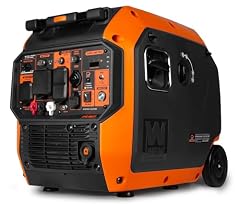
WEN 6800-Watt Dual Fuel RV-Ready Electric Start Portable Inverter
- Type
- Inverter
- Fuel
- Dual Fuel
- Watts
- 5001 to 9000 W
- Electric start
- Yes
- RV ready
- Yes
- CO sensor
- Yes
$798.00 (as of 10/23/2026 00:29 PDT - Details)
This WEN offers 5001-9000 watts, dual fuel, RV readiness, a CO sensor, and electric start, making it one of the most complete mid-size options for larger RVs or home backup.
Pros
- 5001-9000 W covers large RVs and most homes
- Dual fuel gas/propane
- RV ready with 30A outlet
- CO sensor and electric start
Cons
- Heavier than sub-5000W units
- May be overkill for small campers
Good fit if
- Owners of big fifth-wheel RVs
- Those who want one unit for both RV and emergency home use
Skip if
- You only need 2000-3000W for basic camping
- You want a truly portable generator
Verdict: A balanced mid-size dual fuel generator with enough muscle for demanding RV loads.
10 Best electric start mid-size

PowerSmart 4800 Watt Electric Start Portable Inverter Generator
- Type
- Inverter
- Watts
- 3000 to 5000 W
- Electric start
- Yes
$599.99 (as of 10/22/2026 23:57 PDT - Details)
The PowerSmart 4800 gives you a 3000-5000W output with an electric start, making it easy to fire up for jobsite power or home backup. It’s a straightforward choice for users who skip pull cords.
Pros
- 3000-5000 W for tools and appliances
- Electric start for easy ignition
- Gasoline powered, simple maintenance
Cons
- No CO sensor listed
- Not RV ready
- No dual fuel option
Good fit if
- Contractors and DIYers who run power tools
- Homeowners who want an easy-start mid-size generator
Skip if
- You need RV hookup ability
- You want fuel flexibility or CO safety
Verdict: A reliable electric-start workhorse for jobsite and home use at a mid-size output.
11 Best dual fuel with CO sensor

ERAYAK 4500W Dual-Fuel Portable Inverter Generator for Home Use
- Type
- Inverter
- Fuel
- Dual Fuel
- Watts
- 3000 to 5000 W
- RV ready
- Yes
- CO sensor
- Yes
$559.00 (as of 10/22/2026 23:00 PDT - Details)
This ERAYAK pairs dual fuel with a CO sensor and RV readiness in a 3000-5000W package, giving you modern safety features plus fuel choice. It’s a strong balance of price and specs.
Pros
- Dual fuel (gas and propane)
- RV ready with 30A outlet
- CO sensor included
Cons
- No electric start
- Lacks remote monitoring
Good fit if
- RV users who want CO protection
- Campers who carry propane and gas
Skip if
- You want push-button starting
- You need more than 5000W
Verdict: A sensible mid-size dual fuel generator that doesn’t skip on the CO sensor.
12 Best lightweight mid-range

Pulsar PGD40ISCO Ultra Light Quiet 4000W Portable Gas Inverter Generator
- Type
- Inverter
- Fuel
- Gasoline
- Watts
- 3000 to 5000 W
$450.07 (as of 10/22/2026 23:58 PDT - Details)
The Pulsar 4000 is named “ultra light” and comes in at a 3000-5000W range, making it one of the lighter options in this class. It’s a straightforward gasoline generator for camping or home use.
Pros
- 3000-5000 W output
- Gasoline powered, no mixing
- Brand highlights ultra-light design
Cons
- No RV readiness listed
- No CO sensor
- No dual fuel
Good fit if
- Campers who want a 4000W unit without added weight
- Users who only need gasoline fuel
Skip if
- You need a 30A RV outlet
- You want CO sensor protection or fuel flexibility
Verdict: A practical middle-ground generator for those who value a lighter 4000W frame.
13 Best tri fuel mid-size

Westinghouse 8200 Peak Watt Tri-Fuel Portable Inverter Generator
- Type
- Inverter
- Fuel
- Tri Fuel
- Watts
- 5001 to 9000 W
- Electric start
- Yes
- CO sensor
- Yes
$1,399.00 (as of 10/23/2026 00:29 PDT - Details)
The Westinghouse 8200 fits between 5001-9000W and runs on three fuels, with a CO sensor and electric start. It’s a versatile pick for homeowners who want tri-fuel without the largest frame.
Pros
- 5001-9000 W output
- Tri fuel (gas, propane, natural gas)
- CO sensor and electric start
Cons
- Not RV ready
- Heavier than sub-5000W units
Good fit if
- Home backup with natural gas hookup
- Users who want a CO sensor and easy start
Skip if
- You need an RV outlet
- You want a truly portable generator for camping
Verdict: A well-rounded mid-size tri-fuel generator with modern safety features.
14 Best for maximum power

DuroMax XP28000iHT 28
- Type
- Inverter
- Fuel
- Tri Fuel
- Watts
- Over 9000 W
- Electric start
- Yes
$7,999.00 (as of 10/22/2026 22:57 PDT - Details)
With a 28,000-watt peak output, this DuroMax is the highest-wattage unit in this list, running on three fuels and starting electrically. It’s for serious home or commercial backup needs.
Pros
- Over 9000 W (peak 28,000 actually in name)
- Tri fuel for fuel security
- Electric start
- Massive output for whole-house power
Cons
- No CO sensor listed
- Extremely large and heavy
- Not RV ready
Good fit if
- Large homes or small businesses needing full power
- Users who have a permanent installation space
Skip if
- You need a portable or camp-friendly generator
- You don’t have the budget or space for a giant unit
Verdict: The most powerful pick here, but it demands a dedicated space and serious power needs.
15 Best tri fuel with ATS

GENMAX 10500 Peak Watt Tri Fuel Open Frame Inverter Generator
- Type
- Inverter
- Fuel
- Tri Fuel
- Watts
- Over 9000 W
- CO sensor
- Yes
$1,399.99 (as of 10/22/2026 23:09 PDT - Details)
This GENMAX comes with ATS (automatic transfer switch) readiness, a 50A outlet, a CO sensor, and tri fuel in an open-frame design. It’s built for home integration without the highest price path.
Pros
- Over 9000 W with 50A outlet
- Tri fuel (gas, propane, natural gas)
- ATS compatible for automatic backups
- CO sensor included
Cons
- No electric start (pull start only)
- Open frame may be louder than enclosed units
Good fit if
- Homeowners who want a less expensive ATS-ready unit
- Those who tolerate pull-start in a stationary setup
Skip if
- You want push-button convenience
- You need a fully enclosed, quiet unit
Verdict: A cost-effective way to get tri-fuel and ATS readiness without electric start.
The specs, compared
Why these made the list
We built this guide from a pool of 47 inverter generators listed in the catalog. We shortlisted 15 that cover a range of wattage classes, fuel options, and features such as RV readiness, electric start, and CO sensors. We selected only from the given pool, and we did not test any unit. Prices on this page are live, read directly from the store listing at the time shown. All specifications come from the product listings; when a spec is not listed, we say so. We prioritized established brands and avoided near-duplicate models.
Things to weigh before buying
Understand wattage and starting watts
Inverter generators are rated by running watts and peak (starting) watts. The pool uses ranges like “under 3000 W” or “over 9000 W”. For lights and phone charging, a 2000W unit works. For a refrigerator, you need around 2000W running and more at start. For a 30A RV air conditioner, look for at least 3000W. Always check the peak wattage, which is often higher than running wattage, to handle motor starts.
Choose the right fuel type
Gasoline is the most common and easy to store, but it degrades over time. Dual fuel models also run on propane, which stores longer and burns cleaner. Tri fuel adds natural gas, which is ideal for home backup if you have a gas line. Consider your fuel availability and storage before deciding. Propane and natural gas also produce fewer carbon monoxide emissions per unit of fuel, though all generators need proper ventilation.
Look for RV readiness and outlets
If you plan to power an RV, look for a 30A outlet. Many models in this list are marked “RV Ready”. This lets you plug directly into the RV's power cord without an adapter. Some also have 50A outlets for larger RVs or whole-home transfer switches. Check the outlet type on the product listing to match your needs.
Prioritize CO sensors and safety
Carbon monoxide (CO) is a deadly, odorless gas. The CPSC warns never to use a generator inside a home or garage, and to place it at least 20 feet from doors, windows, and vents. Many modern inverters include a CO sensor that automatically shuts off the generator when CO levels rise. The pool includes several models with this feature. If safety is a top concern, choose one with a CO sensor, and always use a battery-operated CO alarm indoors. Sources: CPSC, CDC, EPA.
Consider electric start and remote features
Electric start lets you start the generator with a push button, avoiding the pull cord. Remote start adds convenience, especially for large units that are hard to reach. Some models also offer Bluetooth monitoring for status alerts. These features add weight and cost, so decide if they are worth it for your intended use. For a small camping unit, pull start may be fine; for a heavy home standby, electric start is a must.
Assess weight and portability
Compact inverter generators under 3000W often have wheels or a lightweight frame, making them easy to move. Larger units can weigh over 100 pounds and are best left in a stationary spot. If you plan to take the generator on camping trips or tailgates, prioritize a model under 5000W and with wheels or a handle. For home backup, weight is less of an issue, but still plan a safe, outdoor location.
Questions
What is the difference between an inverter generator and a conventional generator?
An inverter generator roundup focuses on models that produce cleaner, more stable power by electronically converting DC to AC, which is safer for sensitive electronics like laptops and phones. They are typically quieter and more fuel-efficient at partial loads. Conventional generators run at a constant speed and can cause voltage fluctuations, making them less ideal for small devices. All models in this guide are inverter type, as per the pool filter.
How far away should I place a generator from my home?
The CPSC and CDC recommend placing generators at least 20 feet away from any window, door, or vent, with the exhaust pointing away. Never use a generator indoors, in a garage, basement, or shed, even with doors open. Carbon monoxide can build up quickly and kill you in minutes. Always have a working CO alarm inside your home. Sources: CPSC, CDC, EPA.
Can I run an inverter generator in the rain?
No, generators produce electricity and water is a danger. Most are not weatherproof and should only be used in dry conditions. Place the generator on a dry surface under a canopy or cover, but never inside a building. Always keep it away from moisture to prevent electric shock or equipment damage. Follow the manufacturer's instructions on weather protection.
What does dual fuel mean and is it better than single fuel?
Dual fuel means the generator can run on either gasoline or propane. Propane stores indefinitely, while gasoline can degrade in months. Dual fuel offers flexibility: if one fuel runs out, you can switch to the other. It adds a bit of weight and cost, but for many users the convenience is worth it. Tri fuel adds natural gas, which is ideal for home backup if you have a gas line.
How many watts do I need to power a refrigerator?
A standard refrigerator draws about 600-800 running watts and may need 1200-2000 watts at start. A 2000W inverter generator will usually handle it, but you should check the appliance label. For a larger RV with air conditioning, look for a 3000W or higher unit. Always add a margin for starting surges. The pool's wattage ranges help you match the right output.
Are inverter generators safer than conventional ones?
Inverter generators are not inherently safer in terms of carbon monoxide output; all generators produce CO. However, many inverter models now include CO sensors that automatically shut off the generator when dangerous CO levels are detected near the unit. These sensors can add a layer of protection. Always follow outdoor placement rules and install CO alarms in your home, regardless of generator type. Sources: CPSC, EPA.
Latest changes
- : First published.