
Best 3000 to 5000 W Generators in 2026: 14 Picks Compared
The WEN 4800W dual fuel inverter is the top pick in this 3,000 to 5,000 W group because it combines 4,800 W peak output with dual fuel, electric start, an RV-ready outlet, and a CO sensor. This guide compares 14 generators from the current catalogue using only the specifications listed: wattage, fuel type, inverter or portable design, RV readiness, electric start, and safety features. Live prices are shown by the page; the machines themselves were not tested.
14 picks from 26 generators that match this guide with a price we can quote today, made by 14 makers. Live prices throughout, each with the moment it was read.
The list in brief
Which pick fits you?
- For RV trips with a 30A hookup: Choose an RV-ready inverter with dual fuel and a CO sensor so you can start easily and keep the camper powered on either fuel. See pick 3
- For propane flexibility during outages: A dual fuel model lets you run gasoline now and switch to propane when you need a longer-storing alternate fuel. See pick 1
- For high starting loads near 5,000 W: If your refrigerator, sump pump, or window AC needs headroom, prioritize the highest peak wattage available here. See pick 2
- For occasional camping on a smaller budget: Look for a lower-peak inverter model that still gives you gasoline operation and enough outlet basics for campsite gear. See pick 12
The full list of 14
1 Best overall

WEN Quiet and Lightweight 4800-Watt Dual Fuel RV-Ready Electric Start
- Type
- Inverter
- Fuel
- Dual Fuel
- Watts
- 3000 to 5000 W
- Electric start
- Yes
- RV ready
- Yes
- CO sensor
- Yes
$647.00 (as of 10/23/2026 00:29 PDT - Details)
Combines 4,800 W peak output with the features most people need: inverter, dual fuel, RV-ready outlet, electric start, and CO sensor. Along with the Westinghouse 4000, it is one of only two picks here that pair every one of those features.
Pros
- 4,800 W peak output, the highest among the dual fuel inverter picks in this guide
- Dual fuel: runs on gasoline or propane
- Electric start plus RV-ready 30A outlet
- CO sensor and fuel shut-off listed in the model name
Cons
- The seller does not state separate output figures for gasoline and propane
- Weight and noise figures are not stated in the listing
Good fit if
- RV owners who want a 30A hookup and fuel flexibility
- Homeowners who want electric start and a CO sensor
Skip if
- You need the highest peak wattage here; that is the Westinghouse 5000
- You want a smaller, less featured model for occasional light use
Verdict: The WEN 4800 dual fuel inverter is the most complete package in the 3,000 to 5,000 W class featured here.
2 Best for maximum output

Westinghouse 5000 Peak Watt Super Quiet Portable Inverter Generator
- Type
- Inverter
- Fuel
- Gasoline
- Watts
- 3000 to 5000 W
- Electric start
- Yes
- RV ready
- Yes
- CO sensor
- Yes
$899.00 (as of 10/23/2026 00:29 PDT - Details)
With 5,000 W peak, this is the top wattage pick in the guide. It is a gasoline inverter with electric start, an RV-ready outlet, and a CO sensor, so it gives up dual fuel but keeps the convenience and safety features.
Pros
- 5,000 W peak output, the highest among the picks
- Inverter design with RV-ready 30A outlet
- Electric start and CO sensor included
Cons
- Gasoline only, with no propane option
- The seller does not state detailed fuel capacity or runtime figures
Good fit if
- Households with heavy starting loads such as a well pump or window AC
- Users who want a CO sensor at the top of the wattage range
Skip if
- You want dual fuel capability
- You prefer a smaller inverter around 4,000 W for easier handling
Verdict: The 5,000 W Westinghouse inverter is the choice when peak output matters most.
3 Best dual fuel with remote start

Westinghouse 4000 Peak Watt Super Quiet Dual Fuel Portable Inverter
- Type
- Inverter
- Fuel
- Dual Fuel
- Watts
- 3000 to 5000 W
- Electric start
- Yes
- RV ready
- Yes
- CO sensor
- Yes
$749.99 (as of 10/23/2026 00:29 PDT - Details) Typical price: $799.00, 6% off
This is the other pick here with dual fuel, inverter output, RV readiness, CO sensor, and electric start, and the model name adds remote start. It maxes out at 4,000 peak watts, so it trades top output for feature convenience.
Pros
- Dual fuel gasoline and propane
- Remote electric start plus standard electric start
- CO sensor and RV-ready 30A outlet
- Inverter design
Cons
- 4,000 W peak is below the 4,800 W and 5,000 W picks
- The seller does not list noise or weight figures
Good fit if
- RV owners who want push-button and remote starting
- Buyers who want the full safety and fuel package without the highest wattage
Skip if
- You need more than 4,000 W for a heavy starting load
- You want the simplest possible dual fuel model without remote controls
Verdict: A versatile dual fuel inverter with remote start for most RV and backup uses.
4 Best champion dual fuel RV inverter

Champion 4000-Watt Dual Fuel RV Ready Portable Inverter Generator
- Type
- Inverter
- Fuel
- Dual Fuel
- Watts
- 3000 to 5000 W
- RV ready
- Yes
$719.00 (as of 10/22/2026 22:44 PDT - Details)
Champion's 4,000 W dual fuel inverter is RV-ready and sits in the middle of the class. It is a direct option for buyers who want a 30A hookup and propane capability without remote start.
Pros
- Dual fuel gasoline and propane
- Inverter design with RV-ready outlet
- From a maker focused on portable power equipment
Cons
- No CO sensor listed in the catalogue
- No electric start listed
Good fit if
- RV owners who can start with a pull cord
- Buyers who want propane as a backup fuel
Skip if
- You want CO sensor protection
- You want push-button electric start
Verdict: A capable dual fuel RV inverter for users who do not need start or CO extras.
5 Best 4,500 W dual fuel inverter

ERAYAK 4500W Dual-Fuel Portable Inverter Generator for Home Use
- Type
- Inverter
- Fuel
- Dual Fuel
- Watts
- 3000 to 5000 W
- RV ready
- Yes
- CO sensor
- Yes
$559.00 (as of 10/22/2026 23:00 PDT - Details)
This 4,500 W dual fuel inverter carries a 30A RV outlet and a CO sensor, placing it between the 4,000 W and 4,800 W picks. The model name also lists an auto switch feature.
Pros
- 4,500 W peak with dual fuel
- RV-ready 30A outlet and CO sensor
- Auto switch listed in the model name
Cons
- No electric start listed
- The seller does not state runtime or starting details
Good fit if
- Buyers who want 4,500 W output with dual fuel and a CO sensor
- Campers and RV users with a 30A inlet
Skip if
- You want electric start
- You want a pick from a brand with a longer service footprint in this catalogue
Verdict: A feature-dense 4,500 W dual fuel inverter for RV and backup use.
6 Best 4,500 W gasoline inverter

WEN 4500-Watt Inverter Generator
- Type
- Inverter
- Fuel
- Gasoline
- Watts
- 3000 to 5000 W
- RV ready
- Yes
- CO sensor
- Yes
$494.99 (as of 10/23/2026 00:29 PDT - Details)
The WEN 4,500 W inverter is gasoline-only and RV-ready, with a CO sensor and fuel shut-off. It delivers many of the same RV and safety features as the top pick without the dual fuel option.
Pros
- 4,500 W peak, higher than the 4,000 W gasoline picks
- RV-ready 30A outlet and CO sensor
- Fuel shut-off listed in the model name
Cons
- Gasoline only, no propane option
- No electric start listed
Good fit if
- RV owners who run on gasoline and want a CO sensor
- Home backup users who want an inverter with a 30A outlet
Skip if
- You expect to run on propane during emergencies
- You want electric start
Verdict: A strong gasoline inverter with RV capability and CO protection.
7 Best 4,800 W with electric start

PowerSmart 4800 Watt Electric Start Portable Inverter Generator
- Type
- Inverter
- Watts
- 3000 to 5000 W
- Electric start
- Yes
$599.99 (as of 10/22/2026 23:57 PDT - Details)
For buyers who want 4,800 W and push-button starting, this PowerSmart inverter is the straightforward choice. It keeps the feature set simple: high peak output, inverter design, and electric start, with no stated fuel type or RV outlet.
Pros
- 4,800 W peak, tied for the second highest peak in this guide
- Electric start
- Inverter design
Cons
- Fuel type is not stated by the seller
- No RV-ready outlet or CO sensor listed
Good fit if
- Campers and homeowners who want electric start without dual fuel or RV wiring
- Users who value a high peak output in an inverter
Skip if
- You need to know the fuel type before purchase
- You want an RV-ready 30A outlet
Verdict: A simple high-output inverter with electric start for users who do not need fuel or RV extras.
8 Best open-frame dual fuel inverter

Champion 4250-Watt Dual Fuel Portable Open Frame Inverter Generator
- Type
- Inverter
- Fuel
- Dual Fuel
- Watts
- 3000 to 5000 W
$653.28 (as of 10/22/2026 22:44 PDT - Details)
Champion's 4,250 W dual fuel inverter is explicitly listed as an open-frame model, which separates it from the other inverter picks in this guide. It gives dual fuel flexibility at a useful mid-range peak wattage.
Pros
- Dual fuel gasoline and propane
- 4,250 W peak output
- Open-frame design named in the listing
Cons
- No CO sensor listed
- No electric start or RV-ready outlet listed
Good fit if
- Buyers who prefer an open-frame inverter layout
- Users who want dual fuel in a mid-size inverter
Skip if
- You want CO sensor or RV-ready outlet
- You want a fully featured remote-start model
Verdict: A dual fuel inverter with an open-frame layout for buyers who want that style.
9 Best non-inverter dual fuel portable
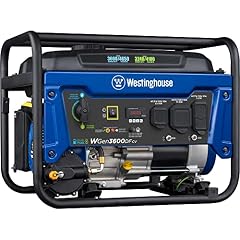
Westinghouse 4650 Peak Watt Dual Fuel Portable Generator
- Type
- Portable
- Fuel
- Dual Fuel
- Watts
- 3000 to 5000 W
- RV ready
- Yes
- CO sensor
- Yes
$399.00 (as of 10/23/2026 00:29 PDT - Details)
The 4,650 W peak dual fuel model is the conventional portable generator in this guide. It skips inverter output but provides dual fuel, RV readiness, and a CO sensor in a straightforward non-inverter design.
Pros
- Dual fuel gasoline and propane
- 4,650 W peak with RV-ready outlet
- CO sensor listed
Cons
- Conventional portable design rather than inverter output
- No electric start listed
Good fit if
- Buyers who want a familiar portable generator layout
- Users who want dual fuel and a 30A RV outlet without an inverter
Skip if
- You want inverter output for sensitive electronics
- You want electric start
Verdict: The conventional portable pick here when dual fuel and RV output matter more than inverter power.
10 Best 3,300 W from an established maker

Generac 3,300 Watt Gas Powered Portable Inverter Generator
- Type
- Inverter
- Fuel
- Gasoline
- Watts
- 3000 to 5000 W
- RV ready
- Yes
$849.00 (as of 10/22/2026 23:09 PDT - Details)
At 3,300 W, this Generac inverter is the smallest pick here, but it brings an established generator brand and inverter output into the lower part of the class.
Pros
- Generac brand with inverter design
- 3,300 W fits the low end of the 3,000 to 5,000 W range
- USB charging listed in the model name
Cons
- 3,300 W peak is the lowest among the picks
- No RV-ready outlet or CO sensor listed
Good fit if
- Users who need modest power for small appliances
- Buyers who prefer an established generator maker
Skip if
- You need 4,000 W or more for large loads
- You want RV-ready power or a CO sensor
Verdict: A 3,300 W inverter from a major maker for lighter loads.
11 Best 3,600 W dual fuel inverter
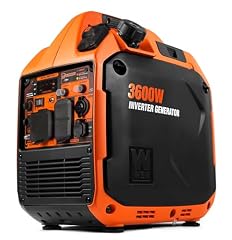
WEN Quiet and Lightweight 3600-Watt Dual Fuel RV-Ready Portable Inverter
- Type
- Inverter
- Fuel
- Dual Fuel
- Watts
- 3000 to 5000 W
- RV ready
- Yes
- CO sensor
- Yes
$521.00 (as of 10/23/2026 00:29 PDT - Details) Typical price: $608.48, 14% off
The 3,600 W WEN gives many of the core features of the larger WEN pick at a lower peak output, including dual fuel, RV-ready outlet, CO sensor, and fuel shut-off.
Pros
- Dual fuel plus inverter output
- RV-ready 30A outlet and CO sensor
- Fuel shut-off listed in the model name
Cons
- 3,600 W peak is near the lower end of this guide
- No electric start listed
Good fit if
- RV users who want a more modest peak and fuel flexibility
- Emergency backup for a few essential circuits
Skip if
- You need 4,000 W or more
- You want electric start
Verdict: A well-rounded lower-capacity dual fuel inverter with RV and CO features.
12 Best 4,000 W gasoline inverter

Pulsar PGD40ISCO Ultra Light Quiet 4000W Portable Gas Inverter Generator
- Type
- Inverter
- Fuel
- Gasoline
- Watts
- 3000 to 5000 W
$450.07 (as of 10/22/2026 23:58 PDT - Details)
Pulsar's 4,000 W gasoline inverter is a mid-range option with an inverter label and a model name that emphasizes light weight and quiet operation. The seller does not list the weight or decibel figures, so those claims need a maker check.
Pros
- 4,000 W peak, in the middle of this guide
- Inverter design
- Model name emphasizes ultra-light and quiet, though exact figures are not stated
Cons
- Weight and noise figures not stated by the seller
- No CO sensor or RV-ready outlet listed
Good fit if
- Buyers who want a 4,000 W gasoline inverter and will verify dimensions and noise with the maker
- Campers who do not need a 30A outlet
Skip if
- Your decision depends on a published weight or decibel number
- You want a CO sensor or RV-ready outlet
Verdict: A 4,000 W gasoline inverter that needs a size and noise check from the maker before purchase.
13 Best 3,800 W with electric start and RV hookup

WEN Super Quiet 3800-Watt RV-Ready Portable Inverter Generator
- Type
- Inverter
- Watts
- 3000 to 5000 W
- Electric start
- Yes
- RV ready
- Yes
$699.99 (as of 10/23/2026 00:29 PDT - Details)
This WEN inverter has a 3,800 W peak, RV-ready outlet, electric start, and fuel shut-off. It is the only 3,800 W pick here that combines RV readiness with electric start.
Pros
- 3,800 W peak with RV-ready 30A outlet
- Electric start
- Fuel shut-off listed in the model name
Cons
- Fuel type not stated by the seller
- No CO sensor listed
Good fit if
- RV owners who want electric start at 3,800 W
- Users who want a WEN inverter without dual fuel
Skip if
- You want a CO sensor
- You need dual fuel or more than 4,000 W
Verdict: A capable 3,800 W RV-ready inverter with electric start for buyers who do not need CO extras.
14 Best 3,800 W dual fuel inverter

PowerSmart 3800 Watt Dual Fuel Inverter Generator for Home Use
- Type
- Inverter
- Fuel
- Dual Fuel
- Watts
- 3000 to 5000 W
$499.99 (as of 10/22/2026 23:57 PDT - Details)
PowerSmart's 3,800 W dual fuel inverter offers propane or gasoline at a lower peak than most of this guide. It suits users who want fuel flexibility without stepping up to 4,000 W or more.
Pros
- Dual fuel gasoline and propane
- 3,800 W peak
- Inverter design
Cons
- No electric start, RV-ready outlet, or CO sensor listed
- The seller does not state runtime or outlet details
Good fit if
- Buyers looking for a dual fuel inverter below 4,000 W
- Simple backup or campsite use without a 30A RV hookup
Skip if
- You want RV-ready output or a CO sensor
- You need higher peak output
Verdict: A straightforward 3,800 W dual fuel inverter for users who want propane backup at a lower capacity.
The specs, compared
Why these made the list
How we picked: The pool file for this guide holds 22 generator listings in the 3,000 to 5,000 W range. We selected 14 that cover a spread of peak wattage, fuel types, and body styles. Preference went to established makers, new condition, and clearly stated specs. We kept models with an RV-ready outlet, dual fuel, CO sensor, or electric start because those are the features readers search for in this class. Every pick comes from the pool file; nothing was added beyond the listings. The prices displayed next to each product are live and read from the store at page-load time, so they may change. No one at the site has run or measured these generators; the picks are based on the makers' published names and the specifications in the current catalogue.
Things to weigh before buying
Peak watts vs running watts
Most model names in this class are built around peak watts, such as 4,650 Peak Watt. Peak wattage describes the surge a generator can supply for a few seconds while a motor starts. The continuous, or running, wattage is often lower and may not be stated in the listing. Add up the starting watts of the appliances you plan to run, then confirm the maker's running wattage from a spec sheet before you choose.
Inverter vs conventional portable
Inverter generators use electronic regulation to produce steadier output, which matters for laptops, televisions, and other sensitive devices. Conventional portable generators are often simpler and built around larger frames, but their output can vary more. The pool here is mostly inverters; the Westinghouse 4650 dual fuel unit is the conventional portable pick, so it is the choice when inverter output is less important.
Dual fuel: gasoline and propane
Dual fuel models accept both gasoline and propane. That gives you a second fuel source if gasoline is unavailable and lets you choose propane for longer storage. Listings do not always state separate wattage figures for each fuel, so the same generator may produce less on propane. Check the maker's spec sheet for propane-specific output before relying on it.
CO sensors and safe placement
Carbon monoxide is invisible and odorless. CPSC, CDC, and EPA all say to run portable generators outdoors only, more than 20 feet from windows, doors, and vents, with a battery-operated CO alarm inside. Several picks include a CO sensor, but a sensor is an added layer, not a substitute for outdoor placement. Never run a generator in a garage, basement, or shed.
RV readiness and electric start
An RV-ready generator has a 30A outlet, which lets you connect to a travel trailer or camper inlet with the proper cord. Electric start adds a push-button or remote start so you do not have to pull a cord. Not every pick has both, so check the specifications line for each product.
Brand and service footprint
Most picks here are from established generator makers such as WEN, Westinghouse, Champion, Generac, and PowerSmart. Buyers who plan to keep a generator for years should prefer a brand with published documentation and available parts, and should verify local service options before purchase if that matters to them.
Questions
What can a 3,000 to 5,000 W generator run?
A 3,000 W class unit can handle lights, a refrigerator, fans, phone and laptop charging, and small tools if you stagger starts. A 4,000 to 5,000 W unit adds larger loads such as a window air conditioner, space heater, or sump pump. Exact wattage depends on starting surge and the number of appliances, so add appliance nameplate watts before deciding.
What is the difference between starting and running watts?
Starting watts, sometimes called peak watts, is the brief surge needed to start motors in appliances like refrigerators, pumps, and AC compressors. Running watts is the steady power needed to keep them going. A 4,650 Peak Watt generator may have a lower running wattage, so you need enough running watts for the loads and enough peak for the largest motor start.
Should I buy a dual fuel generator?
Dual fuel generators run on gasoline or propane. That flexibility is useful during outages if gasoline is hard to get, and propane stores longer without the same varnish concerns. The tradeoff is that dual fuel models often carry extra parts, and the seller may not list separate output for each fuel. If you expect to use propane heavily, verify propane wattage with the maker.
Are generators with CO sensors safer?
A generator with a CO sensor is designed to shut down before carbon monoxide builds up in an enclosed area. That is useful, but safety agencies are clear that the sensor does not replace placement. CPSC, CDC, and EPA say to run generators outdoors, more than 20 feet from windows, doors, and vents, and to have working CO alarms inside. Sensor or not, never run one indoors.
Can I run these generators in my garage with the door open?
No. CPSC and CDC warn that portable generators can produce deadly carbon monoxide inside or in a garage even when doors and windows are open. The exhaust can enter the home and CO can linger for hours. Run the generator outside, more than 20 feet from the house, with the exhaust facing away, and use a CO alarm inside.
What does RV-ready mean on a generator?
RV-ready usually means the panel includes a 30A outlet matching a travel trailer's standard inlet. With an appropriate cord, the generator can supply power to a camper. If you have a larger 50A RV, confirm the generator and cord combination and the total load your RV draws before buying.
Latest changes
- : First published.