
Best Generators Under $1500 in 2026: 3 Picks
The Westinghouse 14500 Peak Watt Tri-Fuel is the top pick under $1500 for most households. It pairs a remote electric start with transfer switch readiness, and its seller listing places it in the over 9,000 W class alongside the other two picks here. The picks are the three portable generators in the under $1500 pool; the comparison uses only seller-stated fuel type, wattage class, starting features, and CO safety. No one on staff has run these machines, so the rankings rest on the catalog record.
3 picks from 4 generators that match this guide with a price we can quote today, made by 14 makers. Live prices throughout, each with the moment it was read.
The list in brief
| # | Pick | Generator | Price |
|---|---|---|---|
| 1 | Best overall | Westinghouse 14500 Peak Watt Tri-Fuel Home Backup Portable Generator | $1,499.00 (as of 10/23/2026 00:29 PDT - Details) |
| 2 | Best for built-in CO protection | DuroMax XP13000HXT 13 | $1,499.00 (as of 10/22/2026 22:57 PDT - Details) |
| 3 | Highest named peak wattage | Pulsar PG15000TRCO Tri-Fuel Portable Generator | $1,498.00 (as of 10/22/2026 23:58 PDT - Details) |
Which pick fits you?
- For home backup with a transfer switch: A tri-fuel portable with remote electric start and a transfer switch ready claim, suited to powering selected household circuits. See pick 1
- For maximum named peak wattage: The 15,000-watt gasoline peak figure leads this list, with electric start and tri-fuel operation in the same listing. See pick 3
- For an onboard CO sensor: The only pick here whose seller specs include a CO sensor, still on a tri-fuel, over 9,000 W portable frame. See pick 2
The full list of 3
1 Best overall

Westinghouse 14500 Peak Watt Tri-Fuel Home Backup Portable Generator
- Type
- Portable
- Fuel
- Tri Fuel
- Watts
- Over 9000 W
- Electric start
- Yes
$1,499.00 (as of 10/23/2026 00:29 PDT - Details)
This is the most complete all-around listing in the pool. It has remote electric start, transfer switch readiness, tri-fuel capability, and a named peak wattage of 14,500, all from the seller's product name and spec fields. The other two picks are comparable on fuel and wattage class, but neither combines remote start with the transfer switch claim.
Pros
- Remote electric start stated by the seller
- Transfer switch ready appears in the product name
- Tri-fuel operation: gasoline, propane, or natural gas
- Over 9,000 W class with 14,500 peak watts named in the title
Cons
- No CO sensor is stated by the seller
- Exact running wattage for propane or natural gas is not stated by the seller
- Run time and noise specs are not stated by the seller
Good fit if
- Homeowners who want to connect a portable generator to a transfer switch
- Buyers who want remote electric start during an outage
Skip if
- Buyers who want a CO sensor included in the listing
- Buyers who need the absolute highest named peak wattage in this list
Verdict: The most complete high-output tri-fuel listing in this pool for home backup.
2 Best for built-in CO protection
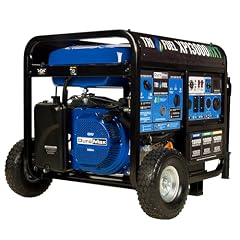
DuroMax XP13000HXT 13
- Type
- Portable
- Fuel
- Tri Fuel
- Watts
- Over 9000 W
- CO sensor
- Yes
$1,499.00 (as of 10/22/2026 22:57 PDT - Details)
Where the other two picks offer remote start but do not list a CO sensor, this DuroMax listing includes a CO sensor in the seller specs. It is still a tri-fuel portable in the same over 9,000 W class, and the seller names a 500cc engine. It is the best choice when an onboard CO sensor matters more than starting convenience.
Pros
- CO sensor is the only one stated among the three picks
- Tri-fuel operation: gasoline, propane, or natural gas
- Placed in the over 9,000 W class in the seller specs
- Seller names a 500cc engine in the product title
Cons
- Electric start is not stated by the seller
- Run time and noise specs are not stated by the seller
- Output for propane or natural gas is not stated separately by the seller
Good fit if
- Buyers who want a stated CO sensor on a high-output portable
- People who plan to switch among gasoline, propane, and natural gas
Skip if
- Buyers who expect electric or remote start, which is not stated
- Buyers who want a maker-stated runtime or noise figure
Verdict: The strongest pick when an onboard CO sensor is the deciding feature.
3 Highest named peak wattage

Pulsar PG15000TRCO Tri-Fuel Portable Generator
- Type
- Portable
- Fuel
- Tri Fuel
- Watts
- Over 9000 W
- Electric start
- Yes
$1,498.00 (as of 10/22/2026 23:58 PDT - Details)
With 15,000 peak watts on gasoline named in the title, this Pulsar has the highest peak figure of the three picks. It also states electric start and tri-fuel operation. Buyers who want maximum named starting capacity in this price bracket should choose it over the two 13,000 and 14,500 watt models.
Pros
- 15,000 peak watts on gasoline, the highest named figure in this list
- Remote and electric start stated by the seller
- Tri-fuel operation: gasoline, propane, or natural gas
- Over 9,000 W class in the seller specs
Cons
- No CO sensor is stated by the seller
- Output for propane or natural gas is not stated separately by the seller
- Run time and noise specs are not stated by the seller
Good fit if
- Buyers who want the highest named peak wattage under $1500
- Buyers who want remote and electric start with tri-fuel flexibility
Skip if
- Buyers who want a stated CO sensor
- Buyers who need separate output figures for propane and natural gas
Verdict: The pick for maximum named peak wattage in this price class.
The specs, compared
| # | Generator | Type | Fuel | Watts | Electric start | RV ready | CO sensor |
|---|---|---|---|---|---|---|---|
| 1 | Westinghouse 14500 Peak Watt Tri-Fuel Home Backup Portable Generator | Portable | Tri Fuel | Over 9000 W | Yes | not stated | not stated |
| 2 | DuroMax XP13000HXT 13 | Portable | Tri Fuel | Over 9000 W | not stated | not stated | Yes |
| 3 | Pulsar PG15000TRCO Tri-Fuel Portable Generator | Portable | Tri Fuel | Over 9000 W | Yes | not stated | not stated |
Why these made the list
This guide covers the under $1500 bracket from the catalogue. The pool contained 3 portable generators after near-duplicate listings were folded, so every pool entry became a pick; the pricing rule required no further shortlist. For each pick the comparison uses seller-stated product names and specifications: fuel type, wattage class, electric start, transfer switch readiness, and CO sensor status. Prices shown on the page are live store prices captured with a timestamp and can move after publication. No one on staff tested these generators, and customer reviews are not repeated here. The comparison is limited to what the listing states.
Things to weigh before buying
Wattage: what the numbers in the name tell you
Every generator in this list is placed in the over 9,000 W category in the pool. The product names add more detail: one lists 13,000 watts, one lists 14,500 peak watts, and one lists 15,000 peak watts on gasoline. Running wattage is the load a generator can support continuously; peak wattage is the short-term capacity for starting motors. The sellers do not give separate running watts for every fuel in the pool, so treat the named figures as the first screen and check appliance labels before deciding.
Fuel: what tri-fuel means
Tri fuel means the engine can run on gasoline, propane, or natural gas, depending on the hookup and the tank or line. All three picks are tri-fuel models. Natural gas is delivered through pipelines and is mostly methane, but it requires a connection, so a tri-fuel generator is best when you have a gas line or propane tank available. The EIA provides background on natural gas as an energy source; the sellers do not state separate output figures for each fuel in the pool.
Starting: remote and electric start
Two of the three picks list electric start: the Westinghouse and the Pulsar. The Westinghouse name also says remote electric start and transfer switch ready. The DuroMax name does not list electric start, so buyers who want push-button or remote starting should check the two electric-start picks. Pull-start remains common on portable generators, but it is not stated for the picks here.
CO safety: sensors and placement
Carbon monoxide is colorless and odorless. CPSC and CDC both say portable generators must run outdoors, more than 20 feet from windows, doors, and vents. One pick in this list, the DuroMax, has a CO sensor in the seller specs. A CO sensor can shut the engine down in some designs, but it does not remove the need to place the generator outside. The other two picks do not list a CO sensor, so you should plan on separate battery-operated CO alarms.
Transfer switch readiness
A transfer switch connects a portable generator to selected circuits in a home and prevents backfeeding. The Westinghouse pick is described as transfer switch ready in its product name. The other listings in this pool do not make that claim. If your goal is whole-house backup, confirm your electric panel can accept a transfer switch and have a qualified electrician handle the connection.
How to read the missing fields
The pool does not include run time, noise level, or exact running watts for each fuel for any of these three generators. If you need those numbers, look for the maker's spec sheet before buying or contact the seller directly. What you can compare from the current record is fuel type, wattage class, starting features, and CO sensor status.
Questions
Can a portable generator be used indoors?
No. CPSC warns that CO from a generator is deadly and can kill in minutes, and CDC says to operate generators outdoors more than 20 feet from windows, doors, and vents. Even a generator with a CO sensor should be placed outside, far from the home. Put battery-operated CO alarms on every level of the house and outside sleeping areas.
What does tri-fuel mean?
All three picks are tri-fuel generators, which means they can run on gasoline, propane, or natural gas. Gasoline is the familiar fuel for portable engines; propane stores well in tanks; natural gas comes from a utility line. The seller specs do not give separate output figures for each fuel for these models. EIA explains that natural gas is mostly methane and is delivered through pipelines.
Do I need a generator with a CO sensor?
Not every portable generator includes one. In this list, only the DuroMax pick has a CO sensor in the seller specifications. A CO sensor can be a useful safety feature, but CPSC and CDC still require the generator to run outside, more than 20 feet from openings, with working CO alarms in the home. Use the sensor as an extra layer, not as a reason to bring the generator indoors.
Which pick has the highest named peak wattage?
The Pulsar PG15000TRCO has the highest named figure in this list: 15,000 peak watts on gasoline. The Westinghouse lists 14,500 peak watts and the DuroMax lists 13,000 watts. The seller entries classify all three as over 9,000 W, and none of the sellers separately lists running watts for propane or natural gas. Use the named peak figure as the starting comparison, not as a continuous-duty figure.
What should I do before connecting a generator to my home?
Start with placement: outside, away from windows, doors, and vents. If you want to power hardwired circuits, a transfer switch is the safe way to connect a portable generator. The Westinghouse pick is described as transfer switch ready. A qualified electrician should install the switch and confirm the generator output is compatible with your panel. Never plug a generator into a wall outlet as a substitute for a transfer switch.
Latest changes
- : First published.