
Best Generators Under $500 in 2026: 7 Picks Compared
The WEN 56477i leads our list of the best generators under $500, offering a 3000-5000 watt inverter with RV-ready convenience and a fuel shut-off switch. We compared 7 portable inverter generators from major brands on wattage, fuel type, RV readiness, and safety features. Prices shown are live from the store listing; no one on our team has tested these units.
7 picks from 10 generators that match this guide with a price we can quote today, made by 14 makers. Live prices throughout, each with the moment it was read.
The list in brief
| # | Pick | Generator | Price |
|---|---|---|---|
| 1 | Best overall | WEN Quiet and Lightweight 4800-Watt RV-Ready Portable Inverter Generator | $634.99 (as of 10/23/2026 00:29 PDT - Details) |
| 2 | Best dual fuel | PowerSmart 3800 Watt Dual Fuel Inverter Generator for Home Use | $499.99 (as of 10/22/2026 23:57 PDT - Details) |
| 3 | Best for home backup | ERAYAK 4500W Portable Inverter Generator for Home Use | $499.00 (as of 10/22/2026 23:00 PDT - Details) |
| 4 | Best for camping | Pulsar PGD40ISCO Ultra Light Quiet 4000W Portable Gas Inverter Generator | $450.07 (as of 10/22/2026 23:58 PDT - Details) |
| 5 | Best parallel ready | A-iPower 2300W Dual Fuel Inverter Generator | $418.49 (as of 10/23/2026 00:37 PDT - Details) Typical price: |
| 6 | Best safety features | Westinghouse 2550 Peak Watt Super Quiet & Lightweight Portable Inverter | $479.00 (as of 10/23/2026 00:29 PDT - Details) |
| 7 | Best for small RVs | Westinghouse 2550 Peak Watt Super Quiet & Lightweight Portable Inverter | $449.00 (as of 10/23/2026 00:29 PDT - Details) |
Which pick fits you?
- For RV owners without large power needs: If you need a generator to run a small RV's lights, fridge, and furnace, a 2500-3000 watt unit like the Westinghouse 2550 (with or without CO sensor) offers RV-ready convenience at a manageable size. See pick 7
- For campers who want fuel flexibility: A dual-fuel model like the PowerSmart 3800 lets you run on gasoline or propane, which is handy when camping in areas with fuel restrictions. See pick 2
- For home backup with moderate loads: If you need to power essential appliances during an outage, the ERAYAK 4500W delivers a 3000-5000 W range and is marketed for home use. See pick 3
The full list of 7
1 Best overall

WEN Quiet and Lightweight 4800-Watt RV-Ready Portable Inverter Generator
- Type
- Inverter
- Watts
- 3000 to 5000 W
- RV ready
- Yes
$634.99 (as of 10/23/2026 00:29 PDT - Details)
Outside this guide's budget at today's price.
This WEN model combines a high power range with RV-ready output and a fuel shut-off switch, making it the most complete package in this price band. Its 3000-5000 W range suits everything from small RVs to emergency home loads, and the inverter design provides clean power.
Pros
- RV-ready inverter output
- Fuel shut-off switch
- 3000-5000 W power range
- Brand emphasizes quiet and lightweight design
Cons
- Carbon monoxide sensor not stated by the seller
- No dual fuel option
- Exact weight not stated by the seller
Good fit if
- RV owners needing a mid-range generator
- Homeowners preparing for extended outages
Skip if
- You want the ability to run on propane as backup
- You require built-in CO detection
Verdict: The WEN 56477i is the most versatile generator under $500, offering RV-readiness, good power, and an inverter for sensitive electronics.
2 Best dual fuel

PowerSmart 3800 Watt Dual Fuel Inverter Generator for Home Use
- Type
- Inverter
- Fuel
- Dual Fuel
- Watts
- 3000 to 5000 W
$499.99 (as of 10/22/2026 23:57 PDT - Details)
If fuel flexibility matters, this PowerSmart runs on either gasoline or propane, giving you options during shortages or cold weather. With a 3000-5000 W range, it can handle typical home loads and cabin use.
Pros
- Dual fuel (gasoline or propane) capability
- Inverter technology for clean power
- 3000-5000 W power range
- Suitable for home backup use
Cons
- Not RV-ready (no RV outlet mentioned)
- CO sensor not stated by the seller
- No parallel-ready indication
Good fit if
- Campers who often use propane
- Homeowners wanting a backup fuel option
Skip if
- You need an RV-ready outlet for direct RV connection
- You want a built-in CO detector
Verdict: The PowerSmart 3800 is a solid dual-fuel choice, but its lack of RV-ready output limits its appeal for RV users.
3 Best for home backup

ERAYAK 4500W Portable Inverter Generator for Home Use
- Type
- Inverter
- Fuel
- Gasoline
- Watts
- 3000 to 5000 W
$499.00 (as of 10/22/2026 23:00 PDT - Details)
The ERAYAK is marketed specifically for home use, with a 3000-5000 W range that can power a refrigerator, lights, and a sump pump during outages. The inverter design makes it safer for sensitive electronics.
Pros
- 3000-5000 W power range
- Inverter technology for clean power
- Designed for home emergency use
Cons
- Not RV-ready
- Gasoline only
- No CO sensor stated
Good fit if
- Households needing emergency backup for appliances
- Campers who also want power for tools
Skip if
- You require dual fuel or propane support
- You need an RV-ready outlet
Verdict: The ERAYAK 4500W is a dependable home backup generator, though it lacks some features like RV-readiness and dual fuel.
4 Best for camping

Pulsar PGD40ISCO Ultra Light Quiet 4000W Portable Gas Inverter Generator
- Type
- Inverter
- Fuel
- Gasoline
- Watts
- 3000 to 5000 W
$450.07 (as of 10/22/2026 23:58 PDT - Details)
The Pulsar gas inverter generator falls in the 3000-5000 W range and is marketed as ultra-light and quiet, which suits camping and tailgating. Its compact design, while not quantified, is a selling point for portable use.
Pros
- Inverter technology for safe electronics
- 3000-5000 W power range
- Brand emphasizes ultra-light and quiet operation
Cons
- Not RV-ready
- CO sensor not stated
- Exact weight not stated by the seller
Good fit if
- Campers who need reliable power for lights and small appliances
- Tailgaters wanting a portable power source
Skip if
- You need an RV-ready outlet for your trailer
- You want a dual fuel option
Verdict: The Pulsar 4000W is a portable, quiet-sounding generator for camping, but its lack of RV-ready connectivity limits its use for trailers.
5 Best parallel ready

A-iPower 2300W Dual Fuel Inverter Generator
- Type
- Inverter
- Fuel
- Dual Fuel
- Watts
- Under 3000 W
- RV ready
- Yes
$418.49 (as of 10/23/2026 00:37 PDT - Details) Typical price: $464.99, 10% off
This A-iPower inverter is the only pick with parallel-ready capability, letting you connect two units to double your wattage later. Its dual-fuel design and RV-ready outlet also add versatility, though its power output is under 3000 W.
Pros
- Parallel-ready for connecting two generators
- Dual fuel (gasoline or propane)
- RV-ready outlet
- Inverter technology
Cons
- Power output is under 3000 W, less than others here
- CO sensor not stated
- May not handle high-draw appliances alone
Good fit if
- Campers who plan to expand power with a second unit
- RV owners needing a compact, fuel-flexible generator
Skip if
- You need higher wattage for large loads
- You want a single unit with maximum output
Verdict: The A-iPower 2300W stands out for its parallel and dual-fuel features, but its lower wattage limits it to light-duty use unless paired.
6 Best safety features
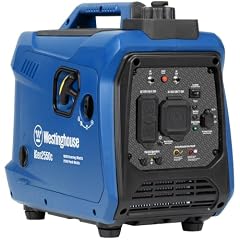
Westinghouse 2550 Peak Watt Super Quiet & Lightweight Portable Inverter
- Type
- Inverter
- Fuel
- Gasoline
- Watts
- Under 3000 W
- RV ready
- Yes
- CO sensor
- Yes
$479.00 (as of 10/23/2026 00:29 PDT - Details)
This Westinghouse model includes a carbon monoxide sensor, which is a valuable safety feature for indoor use prevention. It also has an RV-ready 30A outlet and a peak output around 2550 W, making it suitable for small RVs and camping.
Pros
- Built-in carbon monoxide sensor
- RV-ready 30A outlet
- Under 3000 W class, good for small loads
- Brand emphasizes quiet and lightweight design
Cons
- Power output is under 3000 W
- Gasoline only
- Exact weight not stated
Good fit if
- Campers who prioritize safety with CO detection
- Small RV owners needing a basic generator
Skip if
- You need higher wattage or dual fuel
- You prefer a generator without extra safety features (though they are recommended)
Verdict: The Westinghouse 2550 with CO sensor offers peace of mind and enough power for compact uses, making it a top safety-conscious pick.
7 Best for small RVs

Westinghouse 2550 Peak Watt Super Quiet & Lightweight Portable Inverter
- Type
- Inverter
- Fuel
- Gasoline
- Watts
- Under 3000 W
- RV ready
- Yes
$449.00 (as of 10/23/2026 00:29 PDT - Details)
A sibling to the CO-sensor model, this Westinghouse provides the same RV-ready 30A outlet and sub-3000 W output but without the added cost of a CO sensor. It's a slim, straightforward choice for small RVs and trailers.
Pros
- RV-ready 30A outlet
- Under 3000 W power, ideal for small RVs
- Inverter technology for clean power
- Brand emphasizes quiet and lightweight design
Cons
- No carbon monoxide sensor (safety not built-in)
- Gasoline only
- Exact weight not stated
Good fit if
- RV owners who already have a separate CO detector
- Campers with minimal power needs
Skip if
- You want a built-in CO safety feature
- You need dual fuel capability
Verdict: The Westinghouse 2550 without CO sensor is an affordable, RV-ready generator for small loads, especially when you manage safety externally.
The specs, compared
| # | Generator | Type | Fuel | Watts | Electric start | RV ready | CO sensor |
|---|---|---|---|---|---|---|---|
| 1 | WEN Quiet and Lightweight 4800-Watt RV-Ready Portable Inverter Generator | Inverter | not stated | 3000 to 5000 W | not stated | Yes | not stated |
| 2 | PowerSmart 3800 Watt Dual Fuel Inverter Generator for Home Use | Inverter | Dual Fuel | 3000 to 5000 W | not stated | not stated | not stated |
| 3 | ERAYAK 4500W Portable Inverter Generator for Home Use | Inverter | Gasoline | 3000 to 5000 W | not stated | not stated | not stated |
| 4 | Pulsar PGD40ISCO Ultra Light Quiet 4000W Portable Gas Inverter Generator | Inverter | Gasoline | 3000 to 5000 W | not stated | not stated | not stated |
| 5 | A-iPower 2300W Dual Fuel Inverter Generator | Inverter | Dual Fuel | Under 3000 W | not stated | Yes | not stated |
| 6 | Westinghouse 2550 Peak Watt Super Quiet & Lightweight Portable Inverter | Inverter | Gasoline | Under 3000 W | not stated | Yes | Yes |
| 7 | Westinghouse 2550 Peak Watt Super Quiet & Lightweight Portable Inverter | Inverter | Gasoline | Under 3000 W | not stated | Yes | not stated |
Why these made the list
We started with 7 portable generators in our pool, all of which are inverter models. We shortlisted based on specifications that matter for typical use: power output range, fuel type (gasoline or dual fuel), RV-ready outlet availability, the presence of a carbon monoxide sensor, and parallel operation capability. We noted where a spec is not stated by the seller and did not guess. Prices are shown live from the store listing and may change. No unit was physically tested; all picks are based on published specifications and manufacturer information.
Things to weigh before buying
Wattage: what you actually need
Before picking a generator, add up the running watts of the devices you'll power. A refrigerator uses about 600-800 watts, a sump pump around 800 watts, and a small RV air conditioner can spike to 2000 watts. The models in this list fall into two groups: the 3000-5000 W range (WEN, PowerSmart, ERAYAK, Pulsar) and the under 3000 W group (A-iPower, both Westinghouses). If you only need to run a few lights and a fridge, a sub-3000 W unit is sufficient; for a more demanding setup, aim for the higher range.
Fuel: gasoline, propane, or both
Gasoline is the most common and easiest to find, but it degrades over time and is hard to store long-term. Propane, available in refillable tanks, lasts longer and doesn't go bad. Dual-fuel generators like the PowerSmart and A-iPower let you switch between the two, which is useful during shortages or in cold weather. If fuel flexibility matters, check the dual-fuel option; otherwise, gasoline-only models are simpler and often lighter.
Inverter vs. conventional generators
All picks in this list are inverter generators, which produce cleaner power that's safe for sensitive electronics like phones, laptops, and TVs. They also tend to run more quietly and at variable engine speeds, improving fuel efficiency. Conventional generators are cheaper but noisier and less stable for electronics. For camping and home backup, inverter technology is a worthwhile feature.
Safety: CO sensors and placement
Carbon monoxide (CO) is an invisible, odorless gas that can kill in minutes. The U.S. Consumer Product Safety Commission (CPSC) warns to never run a generator indoors, even in garages or basements, and to place it at least 20 feet from the home, exhaust facing away. Only the Westinghouse 2550 with CO sensor has a built-in detector, which can shut off the unit if CO builds up. Even without a built-in sensor, you must use battery-operated CO alarms in your home and always follow outdoor placement rules.
RV-ready and outlet types
If you plan to plug directly into an RV, look for an RV-ready 30A outlet. The Westinghouse models and the WEN provide this convenience, while the A-iPower also includes RV-ready. Models without an RV outlet require an adapter, which adds extra parts. For small RVs, a 30A connection is standard; for larger rigs, you might need a higher-amperage outlet, which these under-500 units likely won't provide.
Parallel capability for more power
Some generators can be linked with a second identical unit (parallel operation) to double the available wattage. The A-iPower is the only pick here that states parallel readiness. If you anticipate needing more power in the future, this feature lets you expand without buying a new, larger generator. Just remember you'll need a second unit and a parallel cable.
Questions
Can I use these generators indoors?
Never use any portable generator indoors, including in garages, basements, sheds, or near open windows. Engine exhaust contains carbon monoxide, which is odorless and can be fatal. The CPSC states that one generator produces as much CO as hundreds of cars. Always operate the generator outside, at least 20 feet from your home with the exhaust facing away.
Why is a carbon monoxide sensor important on a generator?
A CO sensor automatically shuts off the generator if dangerous CO levels are detected, providing an extra layer of protection. The Westinghouse 2550 with CO sensor is the only pick here that includes this feature. Even with a sensor, you should still run the generator outdoors and use separate CO alarms in your living areas, as recommended by the CDC and CPSC.
What's the difference between gasoline and dual-fuel generators?
Gasoline-only generators, like the ERAYAK and Pulsar, are simpler and often cheaper. Dual-fuel generators, such as the PowerSmart and A-iPower, can operate on either gasoline or propane, giving you flexibility for fuel availability and storage. Propane doesn't go stale over time, which can be advantageous for emergency backup. However, dual-fuel models might have slightly reduced power output when running on propane? Check the manufacturer's specs. In this list, the dual-fuel models still offer adequate wattage for typical uses.
What can I power with a generator under $500?
With a 3000-5000 W generator, you can run a refrigerator (600-800 W), a sump pump (800 W), a few lights (100-200 W), and possibly a small window air conditioner (around 500-1000 W). For sub-3000 W units like the Westinghouse and A-iPower, expect to power smaller loads such as a laptop, phone, a lamp, and a small fridge. Always add up the starting wattage of your devices, which can be two to three times the running watts.
Latest changes
- : First published.